
Hydro jetting is a pipe cleaning method that sends highly pressurized water through a specialized nozzle to scour grease, mineral scale, sludge, and tree roots off the inside walls of drain and sewer lines. Rather than poking a hole through a clog, it restores the pipe’s full diameter. This article explains how the process works, how it compares with snaking, and when it’s the smartest fix for drains that keep backing up.
How 4,000 PSI Hydro-Jetting Removes Grease, Scale, and Tree Roots
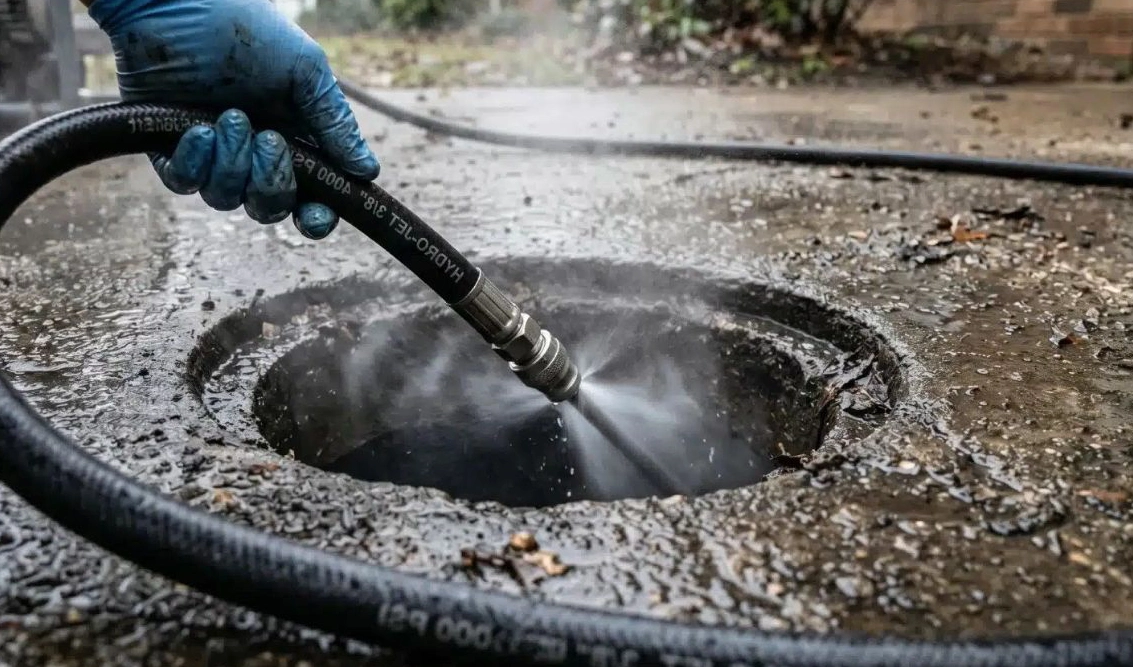
At 4,000 PSI, a jetting nozzle fires water forward and backward through the pipe, cutting through hardened grease, stripping mineral scale, and slicing root masses into pieces that flush downstream. Because the spray reaches the full circumference of the pipe, it cleans the walls instead of simply opening a narrow path through the blockage.
Pressure is only half of it. SETS runs its equipment at 22 gallons per minute, and that volume is what carries loosened debris out of the line instead of letting it resettle a few feet away. The hydro jetting machine feeds a hose through a cleanout, and rear-facing jets pull the nozzle forward as it works, which lets the technician reach deep into a sewer lateral.
- Hardened grease and soap residue that coats kitchen lines
- Root masses that have worked in through joints and cracks
Different nozzles handle different problems. A rotating head suits scale in cast iron, while a more aggressive cutting nozzle goes after roots, and SETS carries custom nozzles for both. Picking the right one comes from seeing the line first, so a camera run often happens before sewer hydro jetting begins.
Grease that’s been layering onto a restaurant line for a decade can come out in a single visit, and the camera afterward often shows pipe walls nobody has seen since the building opened.
Hydro-Jetting vs. Snaking: Which Method Clears Pipes Better
Hydro jetting clears pipes more thoroughly than snaking because it cleans the entire pipe wall instead of boring a narrow opening through the clog. A snake or auger works well for simple, localized blockages like a hair clog, but it can leave grease, scale, and root fragments behind that set up the next backup.
| Factor | Hydro Jetting | Snaking (Cable or Auger) |
|---|---|---|
| How it works | High-pressure water scours the pipe walls | A rotating cable breaks through the clog |
| Best for | Grease, scale, sludge, roots, recurring clogs | Single localized clogs near fixtures |
| Cleans the full pipe diameter | Yes | No, it usually opens a channel |
| Root removal | Cuts and flushes roots out of the line | Cuts a path, fragments may remain |
| Pipe condition needed | Sound pipe, verified by camera | Works on most pipe conditions |
A snake drain cleaner still earns its place. For a bathroom sink with a wad of hair a few feet down, running a cable is quick and effective, and there’s no reason to bring out the jetter. At the fixture level, an auger for drain cleaning is often exactly the right tool.
Trouble starts when snaking becomes the routine fix for a line that keeps clogging. Each pass opens the pipe temporarily, but the buildup on the walls stays behind, which is why the same drain can need attention again within weeks. Hydrojet drain cleaning breaks that cycle by removing the material that keeps catching debris.
The drain that’s been snaked four times this year probably doesn’t need a fifth pass. It needs its walls cleaned.
When Hydro-Jetting Is the Right Fix for Recurring Drain Problems
Hydro jetting is the right fix when the same drain or sewer line keeps clogging, when grease or scale has built up over years, or when roots are intruding at pipe joints. It’s also the standard prep step before trenchless pipe lining, since a liner needs clean pipe walls to bond properly.
- Drains that need clearing more than a few times a year
- Sewer lines being prepped for CIPP relining
- Commercial kitchens where a single backup can shut down service
For businesses, commercial drain cleaning with a jetter usually makes more sense than repeated service calls. Restaurants, offices, and retail spaces in South Side Chattanooga and across North Georgia push far more water and waste through their lines than a typical house does, so buildup accumulates quickly. A scheduled hydro jet service keeps those lines moving without surprise closures.
One caution is worth knowing. Pipes that are already cracked or collapsed can be damaged by high pressure, so an experienced hydro jetting plumber inspects the line with a camera first. SETS does that in house, and if the pipe needs more than cleaning, the same crew can line or replace it. For hydro jetting services in East Brainerd, Rossville, or anywhere nearby, call (423) 499-2911.
Jetting a line that turns out to need lining isn’t wasted work, either. It’s the exact prep the liner requires, just done a step early.