
Trenchless sewer repair rebuilds a damaged sewer line from the inside, using a resin-saturated liner that hardens into a new pipe within the old one, so your yard and driveway stay intact. South East Total Service has performed this work in house since 2019 with LED curing equipment. This article explains how the lining process works, how it compares with open-cut replacement, and which warning signs point toward a trenchless fix.
How Cured-in-Place Pipe Lining Repairs Sewer Lines in Hours, Not Days
Cured in place pipe lining repairs a sewer line by pulling a resin-soaked liner through the existing pipe, inflating it against the old walls, and hardening it with light. The result is a seamless new pipe inside the damaged one, and most residential jobs finish in a single day because nothing has to be dug up.
Before any liner goes in, the line gets cleaned and inspected. A camera run shows where roots, cracks, or offset joints sit, and hydro jetting clears out scale and debris so the resin can bond to clean pipe walls. Skipping that prep is where sewer pipe lining jobs go wrong, which is why SETS handles the cleaning, camera work, and lining with its own crews.
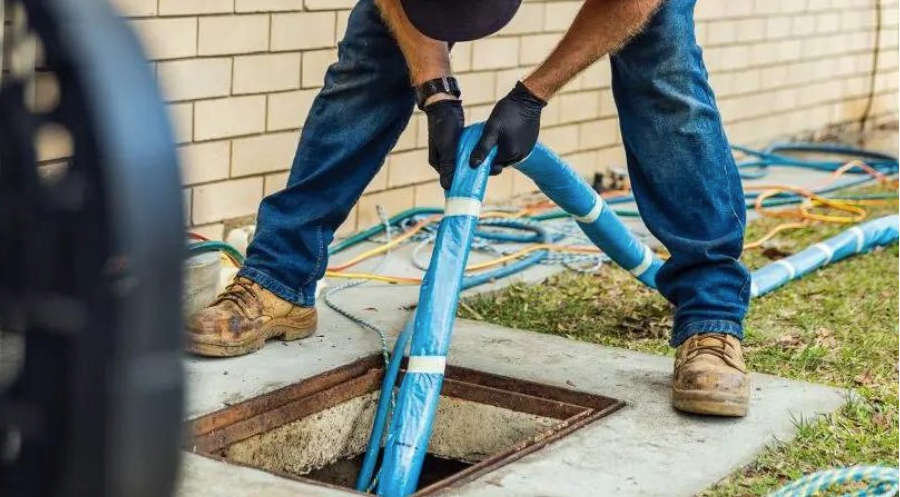
What makes the speed possible is the curing step. For CIPP pipe lining, SETS runs a HammerHead Trenchless Bluelight LED system and was one of the first contractors in the country to bring that equipment in house. The liner cures at roughly 5.4 feet per minute, and the system handles runs up to 328 feet and pipe from 4 to 10 inches across, navigating 90 degree bends through just two access points.
- ASTM F1216 compliant, the recognized standard for cured in place rehabilitation of existing pipe
- An expected added service life of at least 50 years once the liner cures
- A strong fit for cast iron pipe lining and aging clay laterals in older Chattanooga neighborhoods
Once the liner cures, the camera goes back in, and what used to be a cracked, root-choked line shows up on screen as one smooth pipe with no joints for roots to find.
Trenchless vs. Traditional Sewer Repair: Which Option Saves Your Yard
Trenchless repair saves your yard in nearly every case where the existing pipe is intact enough to line. Traditional repair digs a trench along the damaged section, while trenchless pipe lining works through two small access points and leaves lawns, driveways, sidewalks, and streets largely undisturbed.
Anyone weighing trenchless sewer repair vs traditional excavation is really asking two things: how much of the property gets torn up, and how long the household goes without a working sewer.
| Factor | Trenchless (CIPP Lining) | Traditional Open-Cut Repair |
|---|---|---|
| Digging required | Two small access points | A trench along the damaged run |
| Property disruption | Yard, driveway, and landscaping stay intact | Lawn and hardscape removed, then restored |
| Time out of service | Often the same day for residential lines | Can stretch across multiple days |
| Best suited for | Cracks, root intrusion, separated joints | Fully collapsed or badly misaligned pipe |
Where the old pipe has fully collapsed, lining can’t bridge the gap, and digging becomes the honest answer. SETS keeps its own excavation crew for exactly those cases, so a homeowner in Hixson or Ooltewah isn’t stuck coordinating a plumber and a separate excavator.
Among the benefits of trenchless sewer repair that people don’t expect is how it handles pipes under structures. A line beneath a basement slab, a mature oak, or a paved driveway can be rehabilitated without touching any of them. Commercial pipe lining works the same way, and SETS once relined 180 feet of pipe at a restaurant without the business closing its doors.
Signs Your Sewer Line Needs Trenchless Repair Before It Fails
Recurring clogs, sewage odors in the yard, soggy patches over the line, and slow drains throughout the house are the clearest signs a sewer line needs attention. Catching those symptoms while the pipe is cracked but still holding its shape keeps trenchless sewer line repair on the table instead of forcing a full dig.
- Several fixtures backing up at once, especially the lowest drain in the house
- Gurgling toilets or drains right after the washing machine empties
- Unusually green or sunken strips of lawn running from the house toward the street
Tree roots are the usual culprit in older Chattanooga neighborhoods, where clay and cast iron laterals have had decades to crack at the joints. Roots find the moisture, push in, and slowly turn a hairline gap into a blockage.
If you’re wondering how does trenchless sewer repair work for a problem like this, the answer starts with a camera that shows whether a liner will bridge the damage. For no dig sewer line repair anywhere from Signal Mountain to Ringgold, call (423) 499-2911.
Waiting has a specific downside here. A cracked pipe can usually be lined, but one that’s lost its shape underground can’t, and the gap between those outcomes is often just another season of root growth.