
Water heater repair fixes a specific failed part, like a heating element, thermostat, gas valve, or pilot assembly, while water heater installation replaces the whole unit with a new gas, electric, or tankless model. The right call depends on the unit’s age, the type of failure, and your household’s hot water needs. This article covers repair warning signs, the tankless versus tank decision, and how long you can expect a unit to last.
Signs Your Water Heater Needs Repair Instead of Replacement
A water heater usually needs repair rather than replacement when the tank itself is sound and the problem traces back to a replaceable part. Lukewarm water, a pilot that won’t stay lit, a tripped breaker, or popping sounds from sediment often point to components that can be fixed without replacing the entire unit.
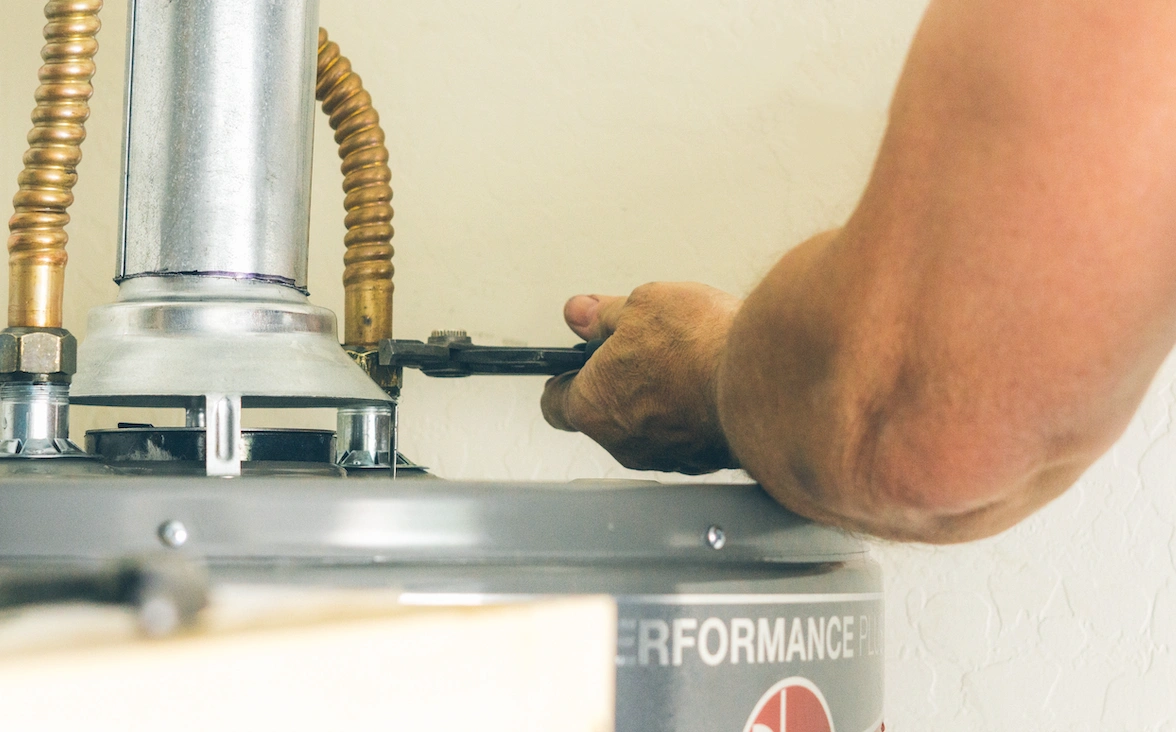
Electric and gas units fail in different ways. On an electric water heater, a burned-out element or failed thermostat is a common reason for running out of hot water early, and both parts can be swapped. A gas water heater with a dead pilot often has a thermocouple or control valve issue, and any gas repair should include confirming the venting meets code.
- Water that runs warm but never gets truly hot
- Rumbling or popping sounds as the burner or elements cycle
- Rusty or discolored hot water, which can point toward a worn anode rod
Some signs mean repair isn’t the answer. A water heater leaking from the tank body, rather than from a fitting or valve, generally means the lining has failed, and no replacement part will seal it. Hot water heater repair makes sense for a unit with years left in it, while a corroded tank is a different conversation.
Water pooling under the tank on a weekday morning is a nuisance, but the same leak discovered after it’s soaked a finished basement in Signal Mountain is a much bigger job.
Tankless vs. Traditional Water Heaters: Which Fits Your Home
A tankless water heater fits homes that want continuous hot water, lower standby energy use, and freed-up floor space, while a traditional tank suits homes that prefer simpler installation and dependable supply for several fixtures at once. Household size, fuel type, and existing gas or electrical capacity usually settle the decision.
| Feature | Tank Water Heater | Tankless Water Heater |
|---|---|---|
| How it heats | Stores a set volume and keeps it hot | Heats water only as it flows |
| Hot water supply | Limited by tank capacity | Continuous, limited by flow rate |
| Space needed | Floor space for the tank | Compact wall-mounted unit |
| Fuel options | Gas or electric | Gas or electric |
| Routine upkeep | Flushing and anode rod checks | Descaling, especially with hard water |
Tankless water heater installation isn’t always a straight swap. Gas models may need a larger gas line or new venting, and electric units can demand significant electrical capacity, so a technician should review the existing setup before you commit.
In homes with hard water, mineral scale builds up inside the heat exchanger, and many tankless water heater repair calls trace back to it. SETS also offers water conditioning and softening, which can help protect either type of unit from scale.
A family of six running two showers and the dishwasher at 7 a.m. will feel the difference between these systems long before anyone reads a spec sheet.
How Long Should a Water Heater Last Before Replacement
Most tank water heaters are built to last roughly a decade, and tankless units often run considerably longer with regular maintenance. Actual lifespan depends on water quality, how heavily the unit is used, and whether it’s been flushed and serviced, so two identical heaters can age very differently in different homes.
Homeowners asking how long does a water heater last are really asking when to stop repairing. Age alone isn’t the trigger, since a decade-old tank that heats well and shows no rust can keep going while a younger one with a leaking tank body can’t be saved.
- Water heater maintenance, including a yearly flush, removes sediment that makes the tank work harder
- Water heater anode rod replacement, once the rod wears thin, helps slow corrosion inside the tank
Pressure is another overlooked factor. On homes with a closed plumbing system, a water heater expansion tank absorbs the extra volume created as water heats, which relieves strain on the tank and its relief valve. SETS handles water heater replacement for gas, electric, and tankless models across Chattanooga, East Ridge, Collegedale, and Fort Oglethorpe. Call (423) 499-2911 to schedule service.
Planning a replacement on a mild spring afternoon beats making the same decision in January with a cold shower as the deadline.